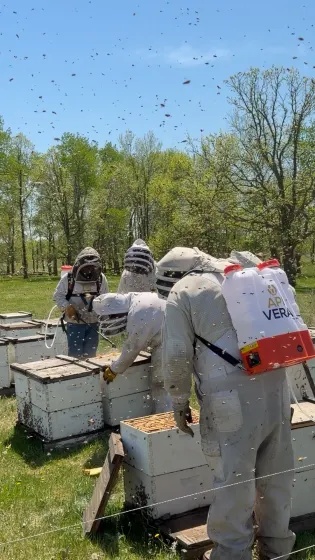
Visible mite pressure
Varroa and other mite pressures are often the most visible colony health challenge. But pests rarely act alone — they can weaken bees and amplify other stressors already building inside the hive.
View mite drop results
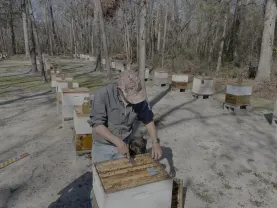
ApiVera helps beekeepers care for the colony health pressures they can see — and the ones they can’t — with products, science, and application workflows built for real apiaries.
Built around what colonies need
Brood health, queen strength, seasonal resilience, and more confidence through the beekeeping year.
Find the right fit for your apiary
Beyond mite pressure
Support what keeps the colony moving forward.
ApiVera helps beekeepers care for brood, queens, colony strength, and seasonal resilience with a more complete view of colony health.
Support brood pattern and colony buildup
Reinforce queen health and colony continuity
Carry support across spring, honey flow, and fall
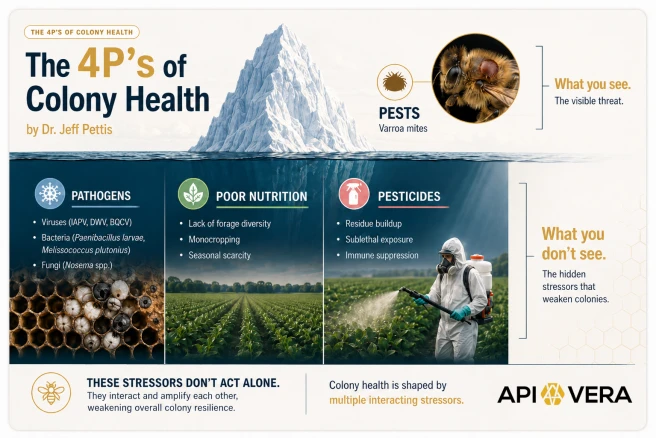
Healthy colonies are shaped by more than mite pressure. Pathogens, poor nutrition, and pesticide exposure can quietly compound stress inside the hive. ApiVera helps beekeepers look at the full colony health picture — so support can be more proactive, seasonal, and complete.

Varroa and other mite pressures are often the most visible colony health challenge. But pests rarely act alone — they can weaken bees and amplify other stressors already building inside the hive.
View mite drop resultsApiVera has been tested by researchers against pathogen pressure, including IAPV. It helps beekeepers think beyond visible mite pressure and better understand hidden stressors that can weaken a colony.
When forage is inconsistent, colonies may miss key nutritional inputs. ApiVera connects nutrition support to the role certain amino acids may play in bee cognition, foraging, brood development, and seasonal resilience.
ApiVera is part of Terra Vera’s oxidant platform, developed as an alternative to harsher pesticide-based approaches in agriculture. Its chemistry is designed to break down into benign components rather than leave harmful residues in the beekeeping environment.
Learn about Terra Vera’s platformQueen health is one of the clearest indicators of a colony’s future strength. A well-developed queen supports consistent brood pattern, colony continuity, and the hive’s ability to build through the season.
Georgia Queen Study
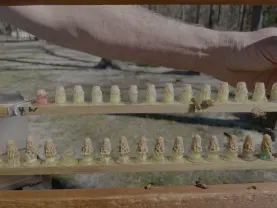
Dr. Jeff Pettis conducted field trials with a local Georgia beekeeper in early Spring 2025. ApiVera was applied to new 24-hour-old queen larvae, with zero mortality observed in treated queen cells.
ApiVera-treated groups showed promising queen-health signals, including heavier queens in treated groups and zero observed mortality in treated queen cells.
Read the queen rearing studyQueen quality influences brood pattern, colony buildup, and long-term colony performance. This brief explains why queen health is such an important signal for beekeepers.
View queen quality overviewConsistent brood patterns help beekeepers assess colony momentum, queen performance, and seasonal readiness.
View brood pattern case studyApiVera brings together Hive Health Nutrients, Hive Wash, and application tools so beekeepers can build a practical program around the way they actually manage bees.

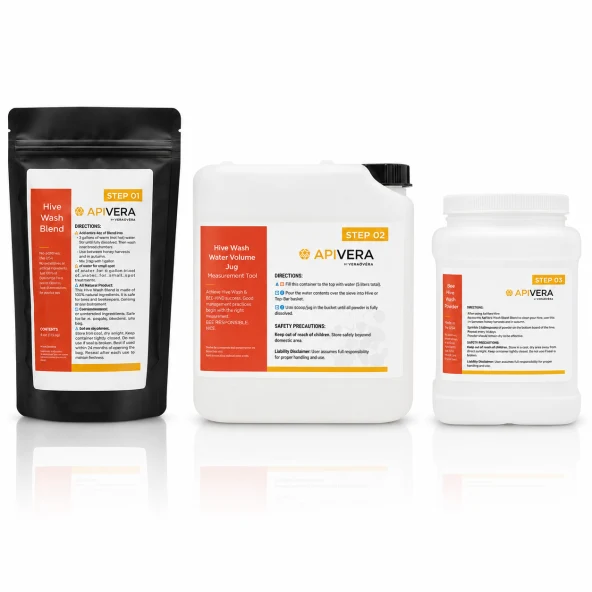
A cleaning workflow for deadouts, used boxes, tools, and hiveware before equipment returns to service.
Shop Hive Wash
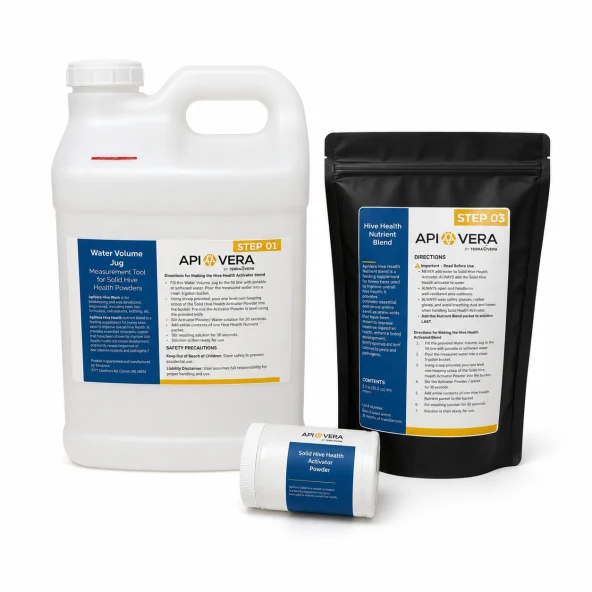
Season-long support for brood development, colony strength, and hive health during spring buildup, nectar flow, and fall prep.
Shop Hive Health
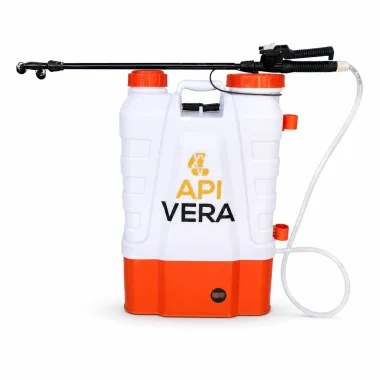
Handheld sprayers, backpack misters, portable on-hive foggers, and high-efficiency fogging systems let beekeepers match ApiVera to their yard size and labor model.
Compare MethodsApiVera can be applied through simple manual methods, mobile backpack workflows, repeatable on-hive fogging, or high-throughput commercial systems. Use this comparison to find the right place to start.
A simple, budget-first option for small hive counts and hands-on applications.
Small apiaries and lowest upfront equipment cost
Budget-friendly
The lowest equipment entry cost for a hands-on workflow.
Coming soonA fast, field-ready workflow for beekeepers moving through multiple hives and yards.
Fast mobile applications across growing operations
Best mobility
Move continuously through the yard with a field-ready setup.
View Backpack MisterRepeatable, direct-on-hive application built around measured dosing, consistency, and portability.
Beekeepers who want repeatable dosing with less operator variability
Best repeatability
A repeatable on-hive workflow that reduces operator variability.
View On-Hive FoggerA commercial-oriented system for high-output, palletized, and large-yard workflows.
Commercial operators prioritizing speed, scale, and palletized workflows
Built for scale
Designed for maximum throughput across commercial workflows.
View HE Fogger
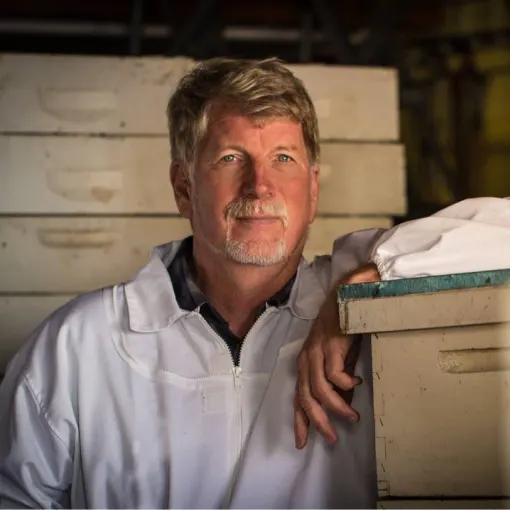
Dr. Jeff Pettis is a leading honey bee researcher and longtime advocate for practical, science-backed colony care. His work with ApiVera helps connect the 4P’s framework — parasites, pathogens, poor nutrition, and pesticides — to real-world beekeeping decisions.
Tropilaelaps mites are an emerging threat for beekeepers monitoring the next wave of pest pressure. Through Terra Vera's partnership with Dr. Samuel Ramsey and his team, we are staying engaged with the challenges that may shape the future of beekeeping worldwide.
Explore the studies, presentations, interviews, and field observations behind ApiVera’s approach to colony health — from queen safety and Hive Wash deadout cleanup to Varroa pressure, pathogens, nutrition, and practical beekeeping workflows.
Featured study
Dr. Jeff Pettis evaluated ApiVera in queen-rearing conditions with a Georgia beekeeper.
Read studyDeadout study
A Dr. Jeff Pettis study on deadout cleanup, biosecurity, package installation, and honey production.
Read studyCommercial case study
A commercial field story following colonies through long-distance movement, stress, and recovery.
Read case studyA quick guide to what ApiVera is, how it fits into colony care, and where to go next based on how you keep bees.
ApiVera is Terra Vera’s honey bee health product line, designed to help beekeepers support live colonies, clean deadouts, and choose application workflows that fit their hive count and operation. Start with ApiVera products or browse the resource library.
No. Mite pressure is important, but ApiVera is built around a broader colony health view: parasites, pathogens, poor nutrition, and pesticide exposure — the 4P’s of colony health. Learn more in The ApiVera Colony Health Framework.
ApiVera has been evaluated in field and research settings focused on colony outcomes, including queen safety, brood pattern, and survivability. Review the Queen Rearing Field Study - Georgia and the Mite Knockdown and Brood Pattern Field Observations.
Hive Health Nutrients are used with live colonies to support brood, queens, colony strength, and seasonal resilience. Hive Wash is used when no live bees are present to clean deadouts, boxes, tools, and used hiveware. You can also view the Hive Health Application Guide and Hive Wash Application Guide.
Coverage depends on the product, hive configuration, and application method. As a planning estimate:
Actual coverage may vary. View the individual product page or dosage guide for more detailed application information.
Compatibility depends on the ApiVera product and the treatments currently or previously used in the hive. Hive Health should not be used concurrently with essential oil–based hive products. When one has been used previously, complete a small-scale compatibility test before broader application.
ApiVera is designed for hobbyist, sideliner, and commercial beekeepers. The right workflow depends on hive count, yard setup, labor needs, and whether the priority is simplicity, mobility, repeatability, or throughput. Compare options in the application method guide.
Start with the path that matches how you keep bees. Commercial beekeepers can build a plan around labor, throughput, and colony outcomes. Hobbyist and sideliner beekeepers can start with a simpler workflow for live colonies, deadouts, and seasonal support.
For hobbyist beekeepers, ApiVera makes colony care feel more understandable and more approachable — helping you support the whole hive, not just react when mites show up.
Step 1
Learn what your bees may be facing
Step 2
Start with Hive Health
Step 3
Choose an easy way to apply
ApiVera gives you a clearer way to understand colony stress, support your bees through the season, and choose products without feeling overwhelmed.
Learn why colony care is bigger than mites and how the 4P’s can help you spot the bigger picture.
Choose a simple application method that matches your hive count, comfort level, and beekeeping routine.
Get simple guides, videos, FAQs, and support so you feel confident before your first application.
A simple, low-cost way to start supporting colony health with clear instructions and familiar equipment.
More speed and flexibility for beekeepers treating several hives or more than one yard.
A more repeatable workflow for people who want less operator variability.
Answer a few quick questions about your hives and get guided toward the product and application method that make the most sense for you.
Commercial, sideliner, and hobbyist beekeepers use ApiVera differently. Start with the path that matches your hive count, labor needs, and application workflow.
Hive Health guidance
Complete this check before broader use if an essential oil–based hive product was used previously or if you are unsure of the hive’s treatment history.
Important compatibility information
Hive Health is an oxidative chemistry that may react with essential oil–based products. Do not use Hive Health in conjunction with these products. If an essential oil–based product has been used previously, complete a small-scale compatibility test before treating the full hive or apiary. Read and follow all instructions carefully.
If you are unsure whether the hive is ready for Hive Health, contact Terra Vera before proceeding with full application.
If no unusual response is observed: you may proceed with broader treatment.
If you observe an adverse reaction, bees avoiding the area, or a strong odor: do not continue. Contact Terra Vera before proceeding.